




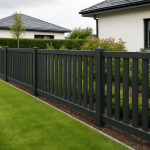




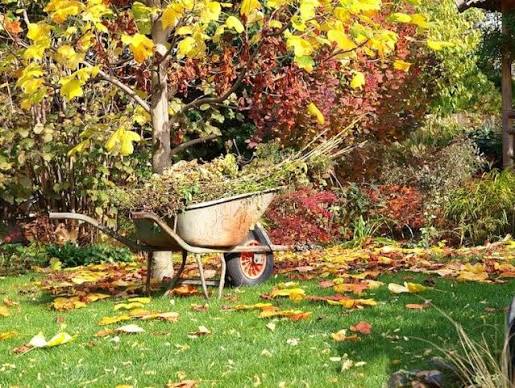
There is a point every autumn when fencing starts telling you what sort of winter it is going to have.
You hear a panel rattling that was quiet all summer. The garden gate catches slightly on the paving. One post seems to move when you push it. Leaves collect around gravel boards and the ground stays wet for days rather than hours.
None of it looks particularly dramatic.
That is precisely why people ignore it.
After decades working on fencing, I would rather find those problems in September or October than receive the phone call after the first serious winter storm. Homeowners searching for fence repair near me after a fence has collapsed often discover that the warning signs were there months earlier.
Autumn gives you a useful window.
Summer has exposed any heat and ground movement. Winter has not yet had the chance to finish the job.
Start With the Posts, Not the Panels
Most homeowners inspect a fence by looking at the panels.
I start with the posts.
Panels are obvious. Posts are structural.
Walk along the fence and place a hand near the top of each post. Give it a firm push in both directions.
There may be a tiny amount of natural movement across the whole fence, particularly with timber systems. What you do not want is a post visibly rocking at ground level.
If it moves independently of the soil or concrete around it, investigate.
One loose post can place extra pressure on two neighbouring sections. The rails pull against their fixings, panels move more in the wind and eventually a relatively small defect becomes a much bigger repair.
Autumn winds will find the weak one.
They always do.
Check What Summer Has Done to the Timber
People associate fence damage with wet weather, but summer causes its own problems.
Timber naturally moves as moisture levels change.
During prolonged dry spells, boards can shrink. Small gaps become larger. Featheredge boards may pull slightly against fixings. Rails can develop cracks.
Most of this is normal.
What matters is whether that movement has affected the structure.
I have seen perfectly serviceable fencing with surface cracks that will last for years. I have also seen rails split almost completely through while looking fairly harmless from the garden.
Give everything a proper look rather than judging the fence from the kitchen window.
Pay particular attention to fixings.
If nails or screws are beginning to work loose, autumn is a good time to deal with them.
Once panels start rattling repeatedly in winter winds, those fixings deteriorate much faster.
Gates Are Brilliant Early Warning Systems
I always check gates.
A gate concentrates a lot of weight and movement onto relatively few components, so problems tend to show there early.
Open it slowly.
Does it clear the ground?
Does the latch still line up?
Has the gap between the gate and post changed?
Does the hinge post move when the gate swings?
If a gate worked perfectly in spring and now catches at one corner, something has changed.
It could simply need adjustment. Timber gates themselves can swell and contract through the seasons.
But don’t immediately move the latch and assume the problem is solved.
Check the post first.
I’ve been to plenty of jobs where a homeowner has adjusted a latch two or three times before realising the entire post is leaning.
The gate wasn’t the problem.
It was the messenger.
Autumn Rain Reveals Drainage Problems
A proper downpour is useful if you know what to look for.
Go outside afterwards and look along your boundary.
Where does the water sit?
If puddles remain around posts long after the rest of the garden has drained, there may be a problem.
This matters particularly with timber posts.
Pressure treatment gives timber significant protection, but permanently wet timber will still deteriorate faster than timber allowed to dry.
The same applies to timber gravel boards.
One thing I see often around Leeds is soil gradually building up against fencing. A border gets topped up. Mulch is added. Plants spread.
After a few years, a gravel board originally installed above the soil line is partially buried.
Nobody deliberately caused the problem.
The garden simply changed around it.
Clear excess material away and give the timber some air.
It costs nothing.
Heavy Clay Needs Watching
Local ground conditions make autumn inspections particularly worthwhile across parts of Leeds and West Yorkshire.
Heavy clay behaves differently through the year.
During dry weather it contracts and can become incredibly hard. Once sustained autumn rain arrives, it absorbs moisture and expands again.
Fence posts have to tolerate that movement.
Proper fence installation accounts for local conditions with suitable post depth, concrete and drainage.
Older or marginal installations may begin moving after repeated wet and dry cycles.
Sometimes you’ll see a small crack around the concrete footing.
Sometimes there is no visible sign at all until you push the post.
That is why physically checking it matters.
Looking isn’t enough.
Clear Leaves Before They Become Wet Compost
Leaves seem harmless.
Against fencing, they can become a problem surprisingly quickly.
Wet leaves collect around gravel boards, beneath gates and against the bottom of panels. Left all winter, they effectively become a damp layer of compost pressed against the fence.
Timber hates that.
I have replaced panels where the upper two-thirds remained in decent condition while the bottom had completely rotted away.
Often the cause wasn’t poor timber.
It was years of damp material collecting around the base.
Sweep leaves away periodically through autumn.
It is probably the least exciting fencing advice anyone will ever give you.
It works.
Look Closely at Climbing Plants
I like planting against fencing.
Done sensibly, it can make a garden look far better.
The trouble comes when climbers take over.
Ivy is the obvious one.
A mature covering can become extremely heavy. Add autumn rain and that weight increases. Strong winds then pull the whole mass backwards and forwards against the fence.
I’ve seen healthy panels dragged away from posts because the planting became heavier than the fencing was designed to support.
You don’t necessarily need to remove established climbers.
Just keep them controlled.
Check that branches aren’t forcing panels apart and make sure you can still inspect the structure underneath.
If you can’t actually see any of your fence anymore, you probably aren’t inspecting it properly.
Don’t Assume Concrete Posts Mean No Maintenance
Concrete posts are extremely durable.
They aren’t magic.
Look for cracking, particularly around the base and fixing points.
Small surface marks aren’t necessarily concerning, but significant cracks deserve attention.
Also check that panels remain seated correctly between posts.
During strong winds, panels can lift slightly within concrete channels. I’ve seen homeowners discover panels hanging on by surprisingly little after a windy night.
Concrete gravel boards should also sit correctly without major cracking or movement.
A robust fencing system still relies on all its components working together.
Composite Fencing Needs An Autumn Check Too
Composite fencing requires less routine maintenance than timber, which is one of its main attractions.
It still deserves an inspection.
Check boards for movement.
Look at trims and fixings.
Make sure vegetation hasn’t blocked drainage around the base.
Pay attention to expansion gaps if the system uses them.
Composite responds to temperature changes differently from timber, so installation accuracy matters.
Given the higher composite fencing cost, catching an installation issue early is particularly worthwhile.
Low maintenance should never be confused with no maintenance.
Decide Whether A Repair Is Actually Worth Doing
This is where experience helps.
Not every damaged fence should be repaired.
Equally, not every ageing fence needs replacing.
If one post has failed in an otherwise strong run, repairing that section can make perfect sense.
If six posts are rotten, several rails have split and the panels are already deteriorating, continually patching individual sections becomes false economy.
I’ve seen fences containing so many repair posts, brackets and improvised supports that replacing them would probably have cost less.
There comes a point where you’re maintaining the repairs rather than the fence.
A decent fencing contractor should be prepared to tell you when leaving something alone is reasonable too.
Sometimes a slightly weathered fence is structurally fine.
It doesn’t need replacing because it stopped looking new.
Check Both Sides Where Possible
This sounds obvious, but plenty of people only ever inspect their side.
Problems often develop on the neighbour’s side first.
Raised borders may be holding soil against gravel boards.
A shed could be directing rainwater towards posts.
Climbing plants might be pushing against panels.
Ground levels can also differ significantly between neighbouring gardens.
If you have a good relationship with your neighbour, ask whether you can have a quick look.
Five minutes can reveal things you’d never see from your own garden.
It can also prevent arguments later.
Fence problems become much harder to discuss once a panel is already lying across somebody’s flowerbed.
Autumn Is Also A Good Time To Think About Replacement
Spring is traditionally busy for fencing because everyone suddenly starts using their garden again.
That doesn’t automatically make spring the best time for the work.
Autumn can be excellent for fence installation.
Temperatures are generally manageable. Gardens aren’t being used as heavily. Plants are beginning to die back, improving access around boundaries.
More importantly, replacing a clearly failing fence before winter removes the uncertainty of waiting for it to collapse.
If several posts already move in September, hoping they’ll survive until April isn’t really a maintenance strategy.
It’s gambling with the weather.
Homeowners considering larger replacement jobs can also check the areas covered by fencing contractors before the busiest emergency period begins.
Planning the work is usually less stressful than reacting to it.
Ten Minutes Now Can Tell You Plenty
You don’t need to turn an autumn fence inspection into a major project.
Walk the boundary after rain.
Push the posts.
Open the gate.
Check the rails.
Clear the leaves.
Look at the bottom of the panels.
See whether water is collecting anywhere it shouldn’t.
That’s most of it.
Fencing tends to give plenty of warning before it fails. The problem is that the warnings are boring.
A gate drops by 10mm.
One post moves slightly.
A rail develops a crack.
Nothing feels urgent.
Then December arrives with saturated ground and a night of strong wind.
By morning, it suddenly feels very urgent.
After enough winters working on fences, I’ve learned not to wait for the dramatic bit. Autumn is when the useful information appears.
You just have to go outside and look for it.